Here’s a full product summary of the Tether Tools Relay Camera Coupler – Canon LP‑E12 (CRCE12 / CRCE15) — its features, specs, pros/cons, and tips. If you want, I can also write up marketing / web copy for it.
Tether Tools Relay Camera Coupler for Canon LP‑E12 (CRCE12 / CRCE15)
What It Is
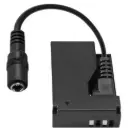
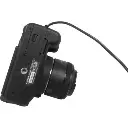
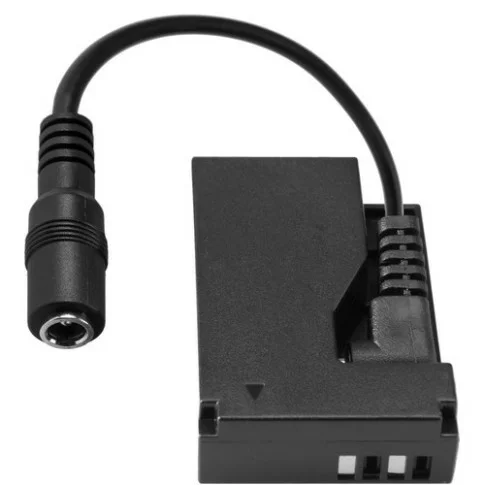
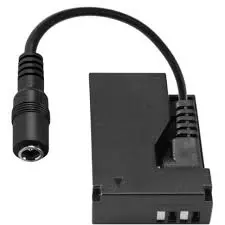
The Relay Camera Coupler for Canon LP‑E12 is a dummy battery accessory that replaces the Canon LP‑E12 battery in compatible Canon cameras. It works with the Tether Tools Case Relay Camera Power System to let you power the camera continuously from an external 5 V (USB) power source or AC, rather than relying on internal battery swaps. It does not store power itself—it passes the external power through.
Compatibility
Canon cameras that use the LP‑E12 battery. This includes models like Canon EOS Rebel SL1 / 100D, and also other EOS M / EOS “M‑series” cameras, depending on region. B&H Photo Video+2Design Info+2
Works only in conjunction with the Case Relay (or ONsite Relay / Relay CPS) power system from Tether Tools. Tether Tools+1
Key Specifications
| Spec | Detail |
|---|---|
| Model Number(s) | CRCE12 / CRCE15 Design Info+3B&H Photo Video+3Polyline+3 |
| Battery Type Replaced | Canon LP‑E12 Tether Tools+1 |
| Cable Length (from coupler to plug) | ~ 10" (≈ 25.4 cm) B&H Photo Video+1 |
| Cable + Relay Cable Combined Length | ~ 50″ (≈ 127 cm) when used with the Relay power unit / cable setup rubbermonkey.com.au+1 |
| Connector Type | Barrel / coaxial DC female input (to connect to the Relay power system) via the built‑in cable. B&H Photo Video+1 |
What It Does Well
Continuous Power: Enables long‑duration shooting (video, time‑lapse, live view) without stopping to change batteries.
Hot‑Swap Friendly: Because the Relay system has an internal buffer (battery backup), you can swap external power sources without losing power to the camera. Tether Tools+1
Cost Efficiency: Saves cost in the long run versus buying multiple LP‑E12 batteries, especially in high‑shoot / extended‑use scenarios.
Using Non‑Proprietary Power: Lets you use standard USB power banks, AC adapters etc., which are easier to replace, more universal, and often more portable.
Limitations / Things to Watch For
No On‑Board Battery: The coupler has no energy storage—if external power fails and no Relay buffer is active, the camera will lose power.
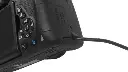
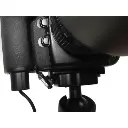
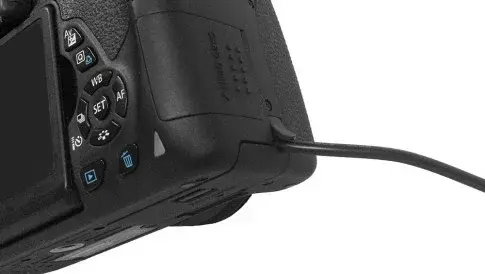
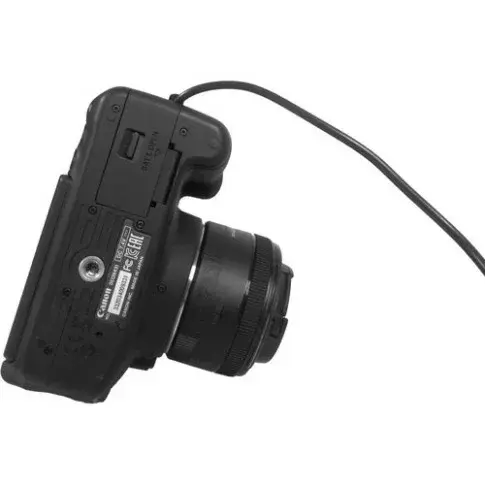
Battery Door Closure: To function properly, the camera’s battery door must be closed completely, with the cable exiting via the rubber trapdoor (if present). If the door is forced or left slightly open, reliability or safety may be compromised. rubbermonkey.com.au+1
Voltage / Current Needs: The external power source and cable must provide adequate 5V current. Poor power supplies, voltage drop, or low‑quality cable can lead to instability.
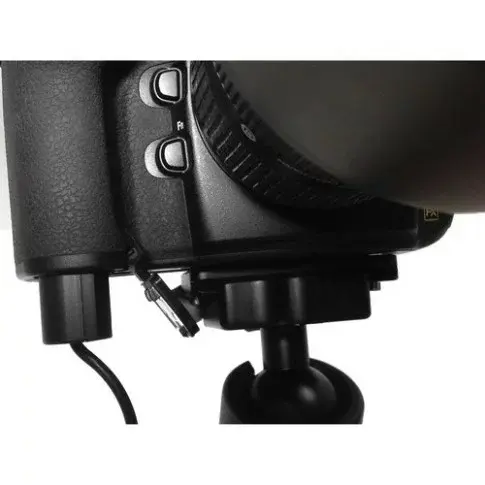
Potential for Cable Strain: The cable exiting the battery compartment is a delicate point—sharp bends or pulls can stress the connector or the door hinge. Proper routing and securing helps.
Heat & Load: In modes like live‑view or video, the camera draws more power and may heat up; sustained use demands good cooling and efficient power delivery.
Usage Tips
Always test with your specific camera model ahead of a critical shoot to verify everything works (battery door closure, live‑view draw, etc.).
Use a high‑quality USB power bank or adapter that can reliably supply the needed current (look for 5V/2A or better, as per camera usage).
Secure the coupler cable with some support (clamp, tape, cable bracket) near the camera to avoid stress on the battery door.
Keep a spare coupler and cable in your kit to avoid downtime in case of damage.
Ensure firmware of camera is up to date—sometimes camera firmware updates affect how power circuits behave when using dummy couplers.
If you like, I can craft you a product description (for a web catalog) or a comparison of this vs. competing dummy battery / coupler systems, so you can see how this stacks up.